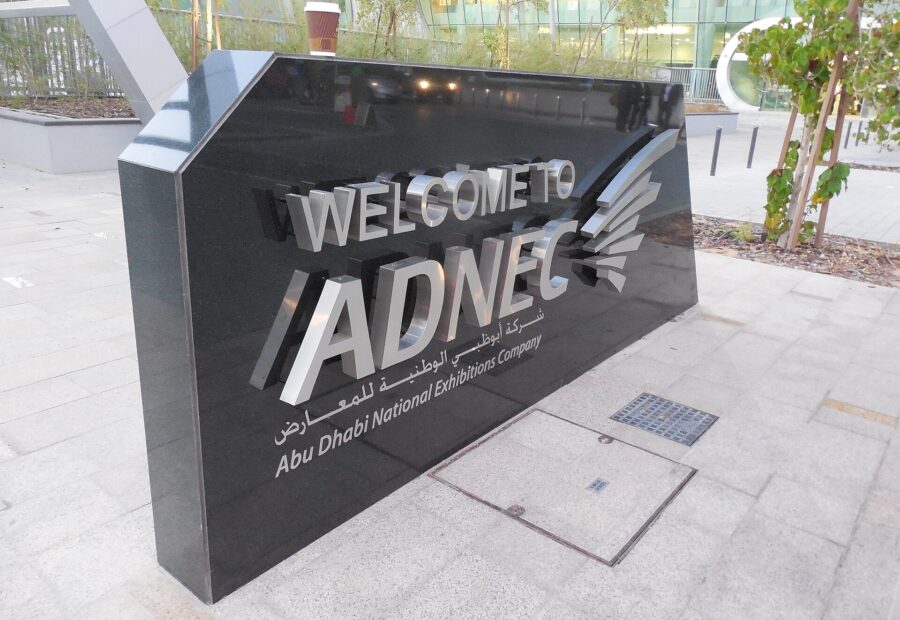
The Abu Dhabi International Petroleum Exhibition and Conference (Adipec) opened on Monday at the Adnec Centre with a record 2,260 exhibitors, and Adnoc chief executive Sultan Al Jaber used the opening address to argue that, after months of disruption in the Strait of Hormuz, energy security is now decided as much by routes to market as by production.
A sold-out show in a disrupted market
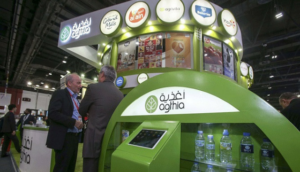
The four-day event, running until November 5, has booked all 16 halls at the Abu Dhabi National Exhibition Centre, according to organiser dmg events, which said extra structures had been built and the opening ceremony moved to free up floor space. Organisers expect more than 239,000 attendees from over 170 countries, 54 national and international energy companies and more than 40 government ministers. BP, Shell, TotalEnergies, ExxonMobil and Chevron are among the producers listed, alongside Siemens, IBM and Microsoft.
The attendance target is in line with last year rather than above it: Adipec 2025 closed with 239,709 visitors from 172 countries. This year’s growth is on the exhibition floor.
The context explains much of that interest. Shipping disruption in the Strait of Hormuz earlier this year was described by the International Energy Agency as the largest supply disruption in the history of the oil market, The National noted, and governments and companies have since been reassessing stockpiles, infrastructure and trade routes.
Asia sends its largest delegation
Asian participation is the most visible shift. Organisers say 353 Asian companies are exhibiting, with national pavilions from China, India, Japan, Malaysia, Singapore and South Korea. Sinopec, CNOOC, CATL, Petronas and Inpex are among them.
The region is the most exposed to any interruption in Gulf flows. Before the conflict, nearly 90 per cent of the crude oil and condensate passing through Hormuz was bound for Asia, with China alone taking 38 per cent, according to US Energy Information Administration data cited by The National. “Asia is at the centre of global energy demand growth,” Adipec chairman Abdulmunim Al Kindy said in September.
Al Jaber: supply is only half the story
Speaking in the presence of Sheikh Mansour bin Zayed, the UAE Vice President, Dr Al Jaber, who is also Minister of Industry and Advanced Technology, set out a stark assessment. Since navigation through Hormuz was disrupted, nearly one billion barrels have been drawn from global crude inventories, diesel stocks in some markets have fallen to their lowest seasonal levels in 35 years, and other markets face a shortfall of up to 600 billion cubic feet of liquefied natural gas, he said, according to The National and Sky News Arabia.
Shipping and logistics, which accounted for less than 5 per cent of the cost of a barrel before the disruption, now exceed 30 per cent, he added. “Energy security is not only measured at the point of production. It is now also measured at the point of delivery,” Al Jaber said, summing up the industry’s experience as having “optimised for just in time” before receiving “the bill for just in case”.
He listed five priorities: more accessible supply through larger strategic storage and refining capacity closer to consumers; secure routes to market backed by infrastructure and logistics; AI-driven “operational intelligence”; investment confidence supported by policy, finance and insurance; and people. He also restated the UAE’s preference for “dialogue, diplomacy and political solutions” to stabilise markets.
The speech coincided with an agreement between Adnoc, OpenAI and G42 to deploy OpenAI’s Frontier platform across Adnoc’s field, well and commercial operations.
AI, power demand and the deal count
Artificial intelligence and electricity demand run through the conference programme. An Adipec survey found that 81 per cent of energy executives expect power demand from AI to exceed current forecasts, while a separate Adnoc and Microsoft study found 89 per cent of energy leaders had raised AI spending over the past year, The National reported. A ministerial panel on energy security brings together UAE Energy Minister Suhail Al Mazrouei and his counterparts from Germany, Turkey and Egypt.
Commercial announcements are expected through the week. Organisers now say last year’s edition produced 49,131 agreements worth $53 billion, a higher figure than the $46 billion from 35,000 deals they announced when the 2025 event closed.