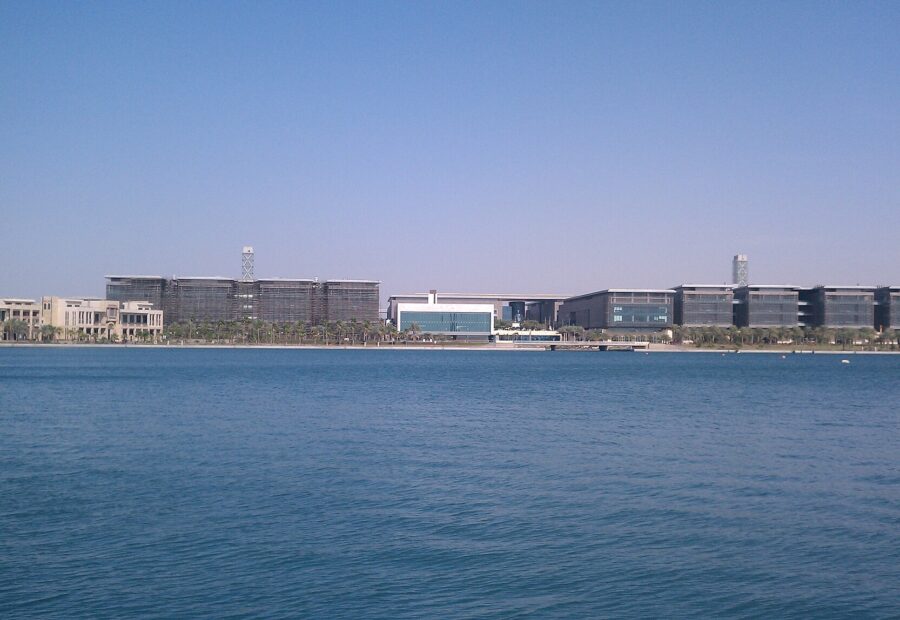
Sixty-six startups supported by Saudi Arabia’s King Abdullah University of Science and Technology (KAUST) raised a combined $338 million in the financial year from July 2025 to June 2026, an increase of more than 30 per cent on the previous year, the university said on November 23, according to the Saudi Press Agency (SPA). The figures, also reported by Al Arabiya and Al Eqtisadiah, take cumulative funding raised by KAUST portfolio companies to about $1.4 billion.
The data comes from KAUST’s latest annual assessment of its entrepreneurship portfolio, which covers 282 active startups and relies on self-reported figures from 83 per cent of them. The university puts the portfolio’s combined valuation at $5.7 billion and its cumulative revenue at $1.1 billion.
Most of the money comes from outside investors
KAUST says it has invested about $77 million of its own money in portfolio companies to date, while roughly 90 per cent of their funding has come from external sources. That outside capital includes $33 million from the National Technology Development Program (NTDP), a government initiative that backs Saudi technology firms.
The largest disclosed round in the period was a $200 million raise by Pasqal, a quantum computing company that is part of the KAUST ecosystem, according to Al Eqtisadiah and Makkah newspaper. Saudi cybersecurity startup COGNNA followed with $9.2 million. Other companies named among the year’s notable fundraisers include Aajil, formerly known as Buildnow, Iyris and Agellus Tank Robotics.
The portfolio spans artificial intelligence, enterprise software, fintech, healthcare, agriculture and advanced technologies. The university highlighted education startups iStoria and Faheem, fintechs Kestrl and EdfaPay, and healthcare companies Cura and Atomica AI as examples.
From lab to market
“The success of so many of our portfolio companies is a testament to the fact that Saudi Arabia is a great place to grow and scale as a business,” said Ian Campbell, senior vice president of KAUST’s National Transformation Institute, adding that the university helps startups “bring their innovations from the lab to the market.”
KAUST combines early-stage investment with access to its core laboratories and specialised facilities. It works with Saudi bank SAB, the NTDP, the National Industrial Development and Logistics Program (NIDLP) and local venture capital firms, and runs programmes including the TAQADAM accelerator, NextEra, ScaleX and the KAUST 4th Industrial Revolution Center.
Haitham Al Humsi, director of innovation ecosystem development, said the university is expanding its Venture Studio, a newer initiative that builds startups around KAUST intellectual property in areas aligned with national priorities. He said it allows the university to bring “new materials, new industrial processes, and sensor-based healthcare innovations to the market.”
Why it matters for Saudi venture capital
Saudi Arabia has become one of the most active startup funding markets in the Middle East and North Africa, helped by state-backed funds and programmes aimed at diversifying the economy away from oil. University-linked deep-tech companies remain a small but growing part of that pipeline, and KAUST’s numbers suggest its spinouts and “spin-ins” are increasingly able to attract private and institutional investors rather than relying on the university’s own capital.
The figures are self-reported and the $200 million Pasqal round accounts for a large share of the annual total, so the year-on-year growth is heavily influenced by a single deal. KAUST says it uses the annual assessment to identify where its ecosystem needs further development and to attract more investment into the kingdom.
Sources:
- Saudi Press Agency – KAUST-Supported Startups Drive Growth in Saudi Arabia’s Venture Capital Ecosystem
- Al Arabiya – KAUST startups attract $1.4bn in funding (Arabic)
- Al Eqtisadiah – KAUST startups raise $338m in a year (Arabic)
- KAUST – official announcement
Read more
 Tamara lines up $400m in asset-backed funding from MUFG and Standard CharteredNovember 23, 2026
 Egypt’s Connect Money raises $3.5m pre-Series A to enter Saudi Arabia and MoroccoNovember 22, 2026
 500 Global and Sanabil pick seven startups from 888 applicants for 12th accelerator batchNovember 20, 2026
 Fanera: Revolutionizing Football Fan Engagement in KSA with Web 3.0July 9, 2024